
Ecosystems and Biodiversity: Why They Matter
Discover why ecosystems and biodiversity are vital for a healthy planet, supporting life, climate stability, and natural resources.
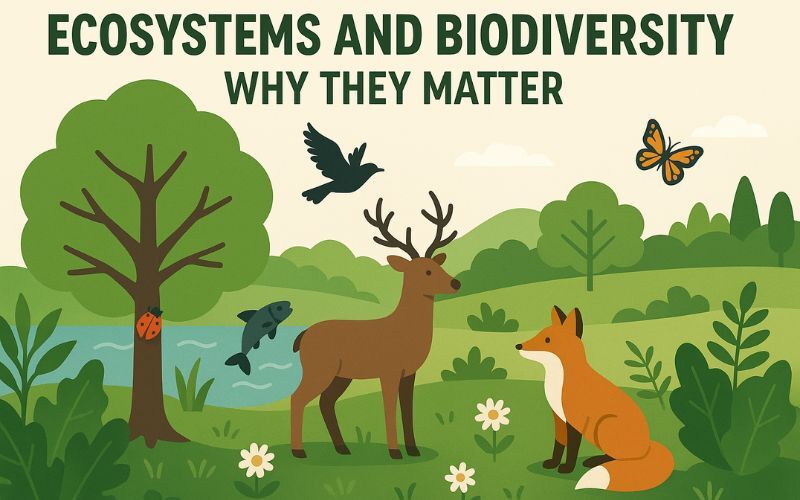
In today’s rapidly changing world, the environment is under constant pressure from human activity, climate change, and industrial expansion. Among the most vital yet underappreciated elements of our natural world are ecosystems and biodiversity. These two interconnected components are foundational to life on Earth, supporting everything from the air we breathe to the food we eat. But what exactly are ecosystems and biodiversity, and why are they so important?
Understanding Ecosystems
An ecosystem is a complex network of living organisms (plants, animals, and microbes) and their physical environment (air, water, and soil), interacting as a system. Ecosystems can range from vast forests and deep oceans to small ponds and urban parks. Each ecosystem has its own unique characteristics and species, all working together in a delicate balance. There are different types of ecosystems:- Terrestrial ecosystems like forests, grasslands, deserts, and mountains.
- Aquatic ecosystems such as freshwater rivers, lakes, wetlands, and marine environments like coral reefs and oceans.
What is Biodiversity?
Biodiversity, short for “biological diversity,” refers to the variety of life in all its forms—genes, species, and ecosystems. It includes:- Genetic diversity: Variation of genes within species.
- Species diversity: The variety of different species within a habitat or region.
- Ecosystem diversity: The variety of ecosystems in a given place.
Why Ecosystems and Biodiversity Matter
- Ecosystems Provide Essential Services
- Provisioning services: Food, fresh water, wood, fiber, and medicine.
- Regulating services: Climate regulation, disease control, water purification, and pollination.
- Supporting services: Nutrient cycling, soil formation, and photosynthesis.
- Cultural services: Spiritual, recreational, and aesthetic benefits.
- Biodiversity Supports Resilience
- Economic Value and Livelihoods
- Health and Medicine
Threats to Ecosystems and Biodiversity
Despite their importance, ecosystems and biodiversity are under immense threat from human activities. Key drivers of biodiversity loss include:- Habitat destruction from deforestation, urbanization, and agriculture.
- Pollution of air, water, and soil.
- Overexploitation of natural resources like overfishing and poaching.
- Climate change, which alters ecosystems and species' survival rates.
- Invasive species that outcompete native species and disrupt local systems.
What Can Be Done?
Preserving ecosystems and biodiversity requires global cooperation and local action. Here are a few key strategies:- Protected Areas: Expanding and enforcing national parks, marine reserves, and wildlife sanctuaries to conserve habitats.
- Sustainable Practices: Promoting sustainable farming, fishing, and forestry to minimize environmental impact.
- Restoration Efforts: Replanting forests, cleaning rivers, and restoring wetlands to revive damaged ecosystems.
- Education and Awareness: Teaching communities the value of biodiversity and how they can help protect it.
- Policy and Governance: Strong environmental laws, international agreements like the Convention on Biological Diversity (CBD), and support for conservation efforts are essential.
Conclusion
Ecosystems and biodiversity are not optional luxuries—they are vital systems that support life on Earth. From the oxygen we breathe to the food we eat, from climate regulation to mental well-being, we depend deeply on a rich, thriving natural world.
Comments
Leave a comment Replying to
Comments are reviewed before they appear. Your email is never published.